
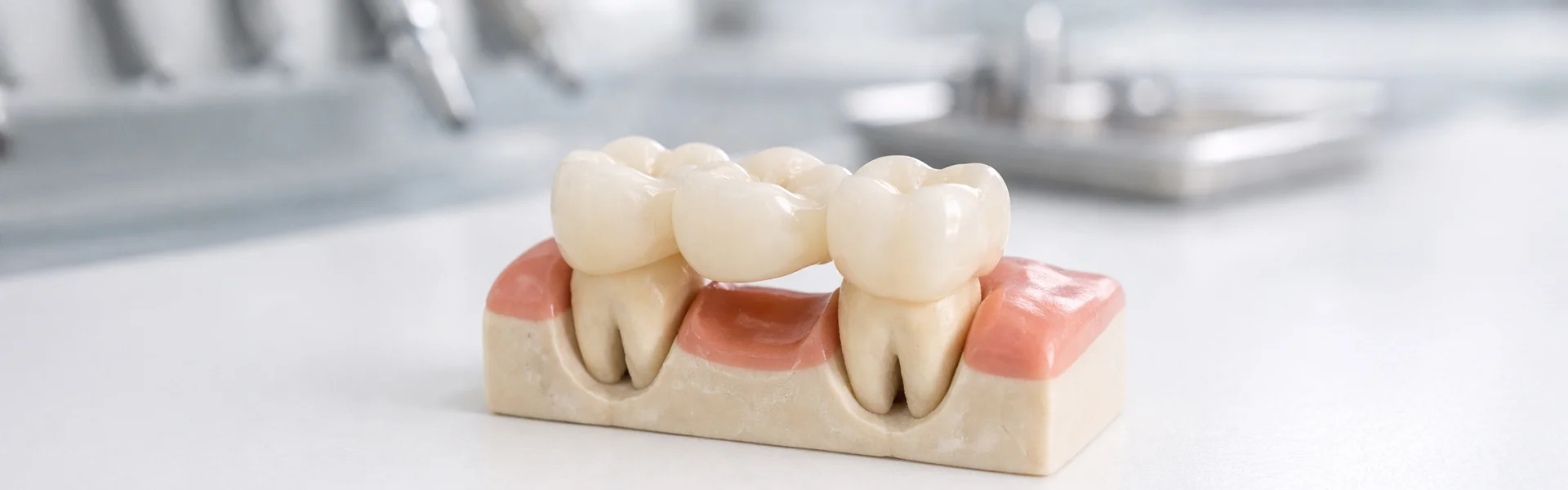
What Are The Types Of Dental Bridges and How Do They Work?
When teeth are missing, everyday functions such as chewing and speaking may be affected, along with your smile’s appearance. If you are exploring dental bridges in Bayport, NY, a bridge may be one option for replacing one or more missing teeth. A dental bridge uses an artificial tooth, or pontic, to fill the space, with support provided by natural teeth, dental crowns, or implants depending on the type.
The four commonly discussed types are traditional, cantilever, Maryland, and implant-supported bridges. Understanding how each works can help you have a more informed conversation with your dentist about tooth replacement.
What Is A Dental Bridge?
Dental bridges can close gaps in a smile. Dental bridges use replacement teeth called pontics to close spaces where natural teeth are missing. Depending on the type of bridge, natural teeth, crowns, a bonded framework, or dental implants may provide support. Although several materials, including gold, are used for making dental bridges, porcelain is more prevalent because it aesthetically blends in with your natural teeth.
Types Of Dental Bridges
There are four major types of dental bridges. They are traditional, cantilever, Maryland, and implant-supported bridges.
Traditional Dental Bridge
A traditional dental bridge has dental crowns holding a false tooth or teeth in place. The bridge is cemented on each of the abutment teeth. Furthermore, the traditional bridge is very popular, and dentists use it when you have natural teeth on both sides of the gap that the missing tooth creates.
Cantilever Dental Bridge
A cantilever bridge works much like a traditional bridge, although its support comes from only one side. A dental crown holds the false tooth in place in a cantilever dental bridge. However, it is cemented to only one abutment tooth. People who qualify for a cantilever dental bridge need only one natural tooth next to the missing tooth’s gap.
Maryland Dental Bridge
Like a traditional bridge, Maryland dental bridges also require two natural abutment teeth. With a Maryland bridge, a metal or porcelain framework is secured to the backs of the abutment teeth to provide support without using crowns. For a Maryland bridge to be considered, supporting natural teeth are typically needed on either side of the missing-tooth space.
Implant-supported Dental Bridge
The implant-supported bridge uses dental implants instead of frameworks or dental crowns. Dental implants anchor an implant-supported dental bridge, reducing the need to rely entirely on neighboring teeth. The number and position of implants are determined by the location of tooth loss, bone availability, and the intended restoration.
Because implant placement involves surgery and requires time for healing, treatment generally takes longer than placement of a conventional fixed bridge. Your dentist can evaluate whether implant-supported tooth replacement is appropriate for your oral health and treatment goals. In cases where one implant for a missing tooth is not possible, the implant-supported bridge will have two implant-supported crowns with a false tooth suspended in between.
The first surgery is implant placement in the jawbone, while the second is bridge placement. Furthermore, it may take months to finish the procedure.
How Does a Dental Bridge Work?
A dental bridge fills the space left by one or more missing teeth with an artificial replacement. A fixed bridge may rely on neighboring teeth for support, while an implant-supported restoration uses implants placed in the jaw.
Depending on its design, a bridge may help:
- Replace one or more missing teeth
- Restore chewing function
- Support clearer speech when tooth loss has affected it
- Help maintain tooth alignment
- Distribute biting forces across the restoration and supporting structures
The exact design and support system vary, which is why a dental evaluation is necessary before treatment.
Why Is A Dental Bridge Necessary?
Missing teeth can cause bone degradation and further damage to your oral health. A cosmetic dentist near you mitigates the effects of missing teeth by restoring your smile, ability to chew properly, and speech. A dental bridge is also suitable for maintaining the shape of your face, preventing the remaining from moving out of their position, and readjusting your bite to distribute biting force properly.
Why Is a Dental Bridge Used?
Missing teeth may affect chewing, speech, tooth alignment, and your bite. A bridge provides missing teeth restoration by filling the open space with an artificial tooth or teeth. For patients searching for dental bridges near me, suitability depends on the condition of the surrounding teeth and other oral health factors.
Which Type of Dental Bridge Is Right for You?
There is no single bridge type that is appropriate for every patient. Your dentist may consider:
- The number of missing teeth
- The position of the missing teeth
- The health and strength of surrounding teeth
- Available jawbone for implant treatment
- Your bite and oral health
- Your long-term treatment goals
A personalized dental evaluation is therefore important before choosing between a traditional dental bridge, Maryland or cantilever design, or an implant-supported option.
How Long Can a Dental Bridge Last?
The lifespan of a bridge varies with the restoration, supporting teeth, oral hygiene, and individual habits. Bayport Dental Care notes that with proper maintenance and care, a dental bridge can last more than a decade.
Protecting the teeth and tissues supporting your bridge is important. Regular dental appointments, along with daily oral care, give your dentist an opportunity to check the condition of your bridge and adjacent teeth.
Caring for Your Dental Bridge
Good daily hygiene helps protect both your bridge and the teeth that support it. Clean your bridge according to the care recommendations from your dentist or hygienist.
Helpful habits generally include:
- Brush twice daily with fluoride toothpaste.
- Clean between your teeth every day.
- Clean carefully under and around the bridge.
- Use floss threaders, interdental brushes, or a water flosser if recommended.
- Attend routine dental visits.
- Do not use your teeth to chew or bite hard items that are not food.
Choosing a Dental Bridge
Each bridge design has different support requirements and clinical considerations. Your dentist can review the space left by the missing tooth, adjacent teeth, bite, and oral health before discussing an appropriate tooth replacement option. Bayport Dental Care can discuss available options and help you understand whether a dental bridge may be appropriate for your needs.
FAQs

About Dr. Mohit “Dr. Moe” Modgil
With over 15 years of experience, Dr. Mohit Modgil is the founder and lead dentist at Bayport Dental Care. A graduate of NYU College of Dentistry with honors in Periodontics, he completed advanced residency training at Stony Brook University Hospital, treating complex surgical and special-needs cases. Dr. Moe is dedicated to evidence-based dentistry and is actively pursuing a fellowship with the American Academy of Implant Dentistry (AAID). Known for his precision and patient-first approach, he combines technology, compassion, and clinical excellence to deliver trusted care to families across Bayport.